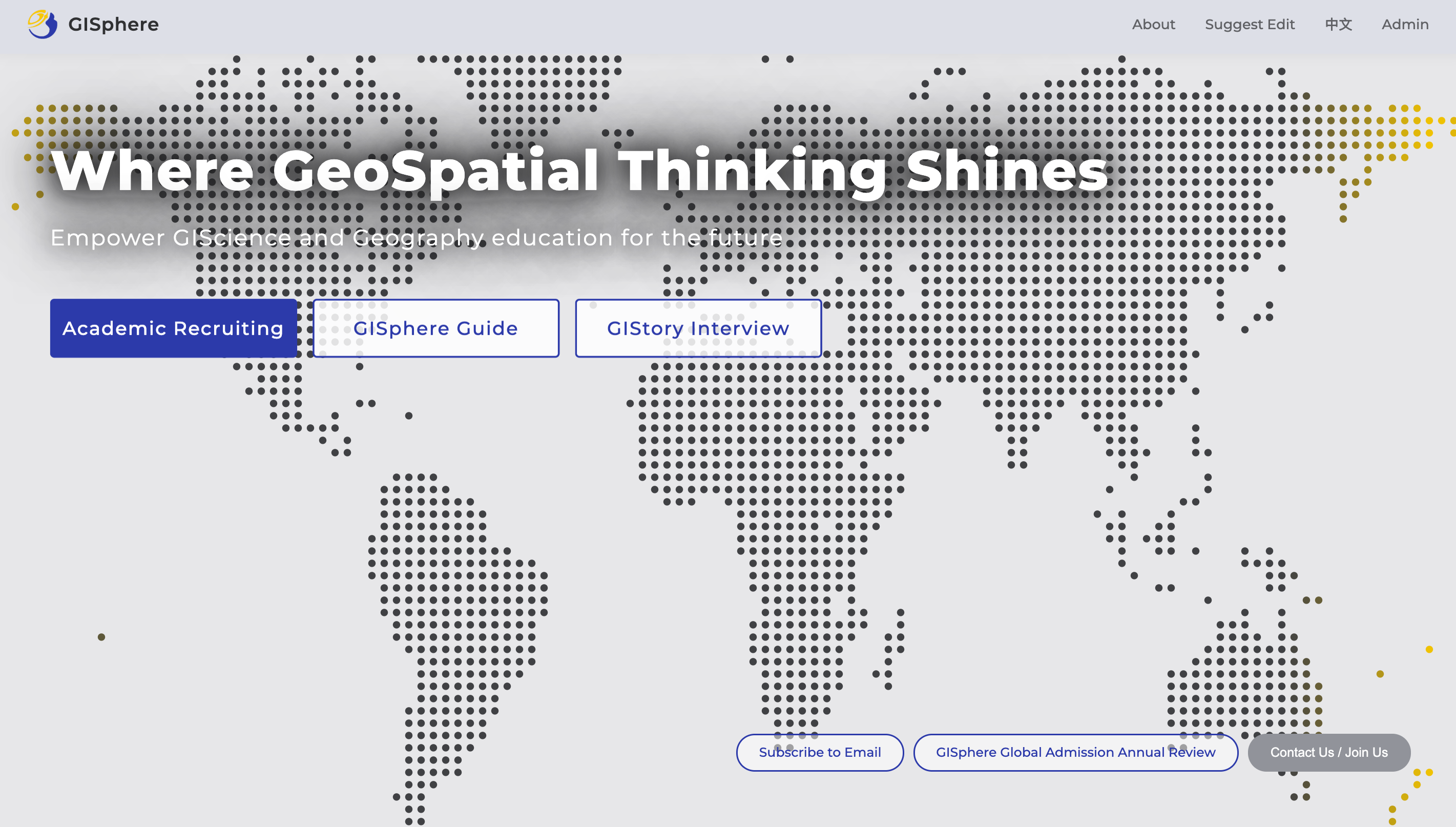
Pivoted a volunteer-run content blog into a structured decision-support tool with a searchable database of 500+ programs and 2,000+ faculty profiles. The broader GISphere community has reached more than 50,000 people across platforms.
GISphere is a student-run, non-profit platform helping prospective graduate students navigate GIS and geospatial science programs worldwide. It started as a Chinese-language content community on Zhihu and WeChat, sharing application experiences through blog posts.
As of 2025, GISphere operates 5 product lines across 9 social channels in Chinese and English, covering the full lifecycle from grad school search to career opportunities.
The original GISphere Guide lived on a static HTML site (gisphere.github.io). All program information was stored as rich-text formatted pages, organized by country, with each country taking up its own sub-page. Finding a specific program or comparing faculty across universities meant clicking through dozens of nested pages manually.
Three core user pain points:
1. No search, no filter. Users couldn't answer basic questions like "which European
programs focus on remote sensing?" without reading through page after page.
2. Information buried in prose. Faculty details, program requirements, and
application deadlines were scattered across unstructured HTML paragraphs, impossible to scan or
compare.
3. Chinese-only, one-channel. The community only reached Chinese-speaking users
through a handful of Chinese platforms. International students had no entry point.
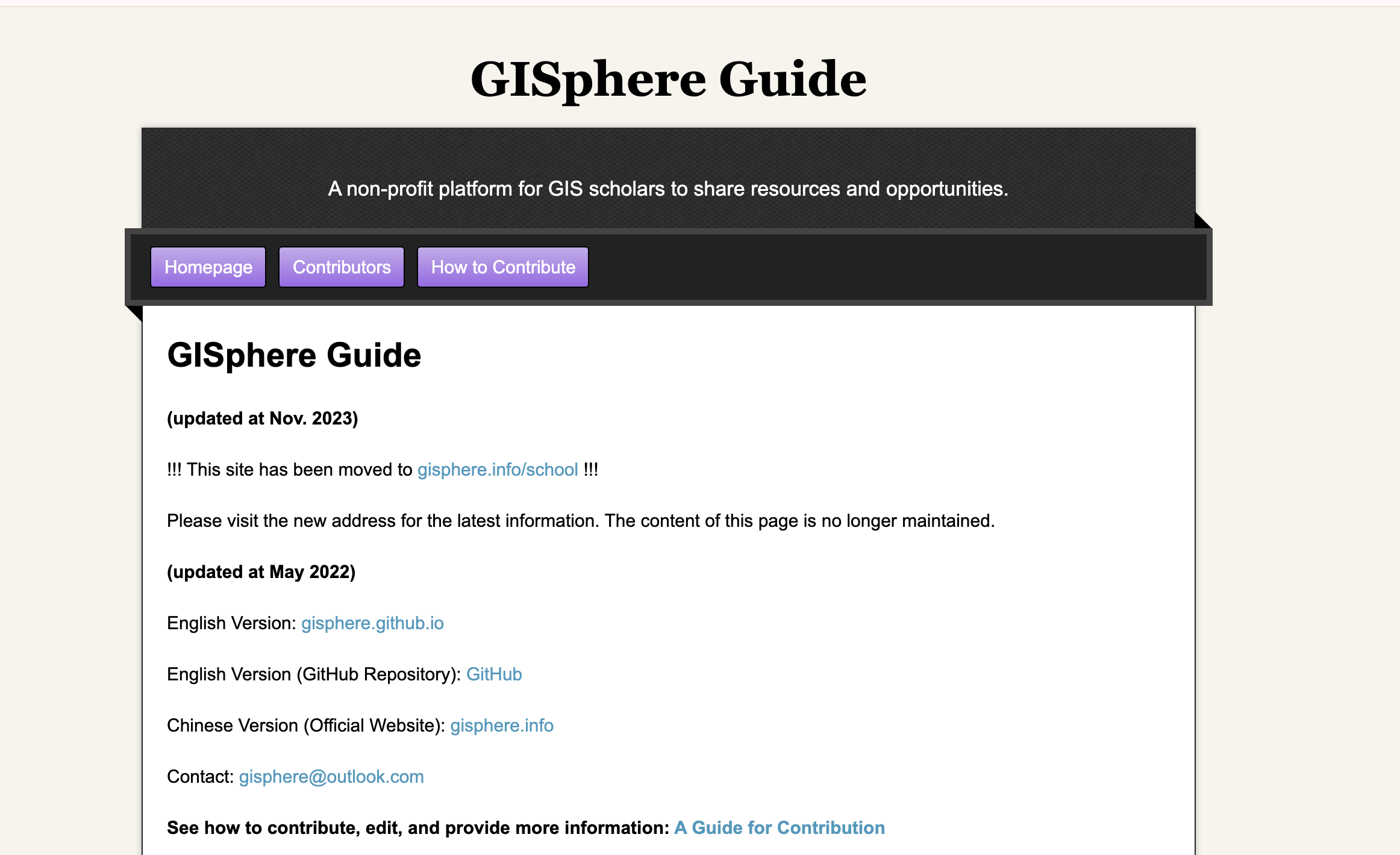
Old site: static HTML, unstructured content
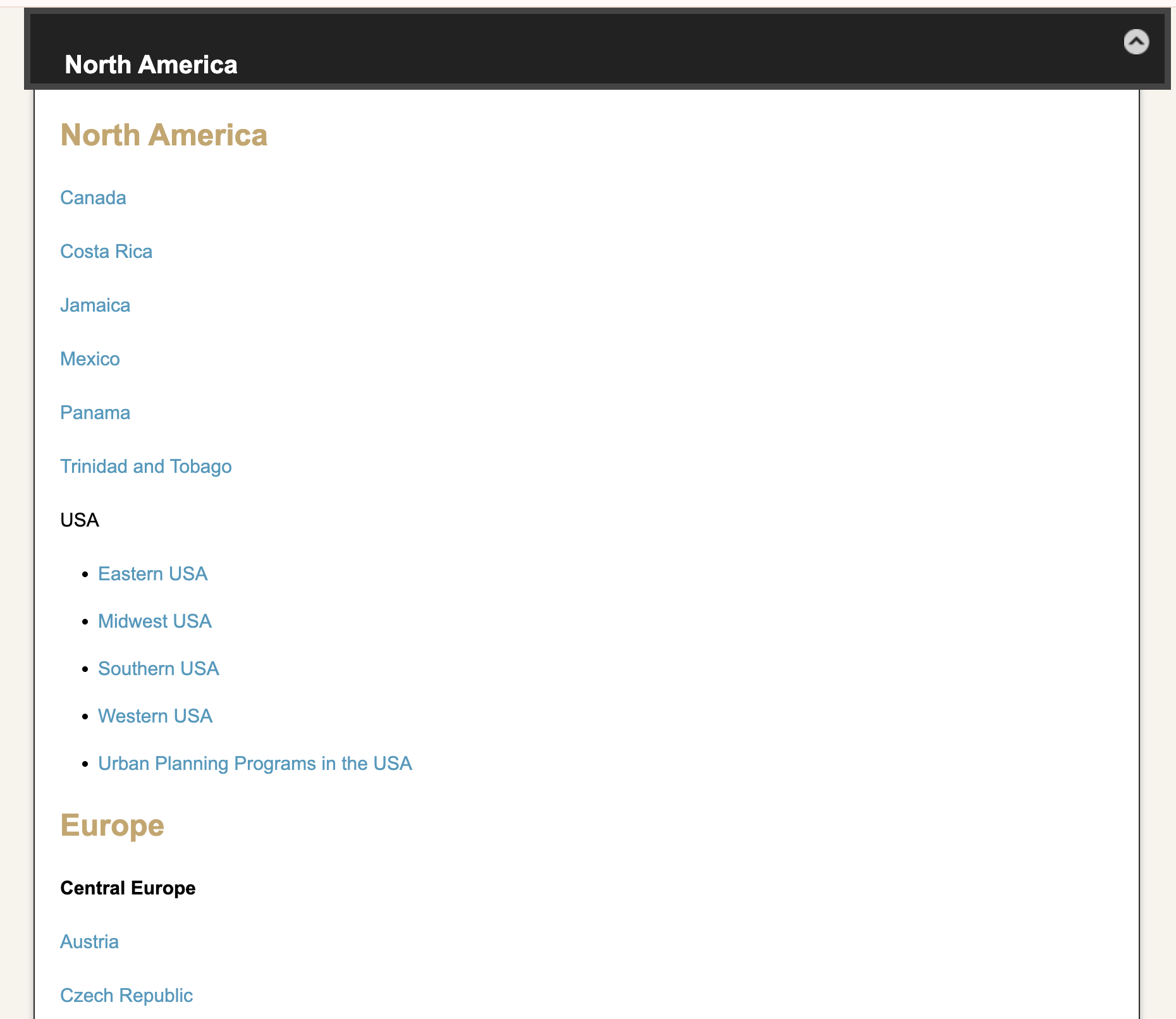
Country-based sub-pages, no search capability
Over three years, GISphere evolved from a volunteer blog into a recognized platform in the geospatial education community, awarded the CaGIS Rising Award in 2023. The platform's research output has also established GISphere as a think tank for global GIS education.
The old site had no database. Everything was HTML. I participated in designing the relational database structure: four core tables for Country, City, University, and Faculty. All existing content was cleaned, structured, and migrated into MySQL Workbench, transforming unstructured HTML prose into queryable records.
Faculty move between universities. To keep the database accurate, I developed an automated crawling tool using LLM-based agents to track faculty mobility across institutional websites. Each automated update went through manual verification by volunteer contributors. We published faculty movement summaries as a regular community resource.
Through conversations with applicants at different stages of their graduate school search, a consistent pattern emerged: people weren't looking for more articles or experience sharing. They wanted to compare programs, faculty, and requirements side by side. These informal but deliberate user conversations shaped my conviction that the platform needed to pivot from content to structured tools.
I mapped a new user journey as a three-stage funnel: Content acquisition → Information retrieval → Decision support. Blog content and webinars became entry points (awareness). The searchable program database handled comparison (evaluation). Faculty profiles with application insights supported final decisions. I designed the filtering system by region, research direction, and degree type.
GISphere had English content before, but translations were inconsistent and hard to navigate. I led the first major overhaul of the English localization, standardizing terminology, improving readability, and making the platform genuinely usable for international students.
GISphere's product lines had grown organically over the years, each addressing a different stage of the applicant journey. As Co-Chair, I worked to consolidate and align them into a coherent ecosystem with a clear user flow: from early exploration to application decision to career development.
GISphere
Guide: The core product. A searchable, filterable database of 500+
programs and 2,000+ faculty profiles. The entry point for most users.
GIStory: Two tracks of experience sharing: industry professional
interviews to help students understand career paths, and application experience
posts from students who've gone through the process.
GISource: Aggregated academic job postings, scholarship opportunities, and conference calls.
Extends the platform beyond grad school into early-career support.
GISalon: Live discussion forums in both languages. The Chinese sessions on Bilibili (18k
followers, 550k+ total views) and international sessions on YouTube
bring faculty and alumni into direct conversation with applicants.
Global
Admission Annual Review: A yearly white paper synthesizing admission
trends, program changes, and community data into a reference document for the next application
cycle.
I led the push to grow international user channels, building a bilingual content distribution system across 9 platforms: WeChat Official Account, Xiaohongshu, Bilibili (Chinese ecosystem), plus X, YouTube, LinkedIn, WhatsApp (international ecosystem). Content was timed around the application cycle, with every piece linking back to the database as top-of-funnel driver.
It would have been easy to keep producing content. That's what we were good at. But the survey data was unambiguous: users wanted tools, not articles. Trusting the research over our assumptions was the most important product decision we made.
A blog post is relevant for one application cycle. A structured database serves users for years with incremental updates. Building infrastructure instead of just content was the shift that created lasting product value.
Managing 80+ volunteers across time zones, with no formal authority or compensation, required creating systems that make contribution easy: clear templates, bite-sized tasks, visible impact. Motivation alone doesn't scale.